


Welded vs. Bolted Steel Connections: Which Works Best for Denver Commercial Projects
Table of Contents
The Challenge: Choosing the Right Steel Connection Method for Your Project
Load-Bearing Capacity: Why Welding Wins for Commercial Applications
Installation Time and Labor: Hidden Costs of Bolted Alternatives
Aesthetic Appeal: Professional Results Through Custom Welding
Why JKD Welding Is Your Clear Choice for Denver Commercial Projects
The Challenge: Choosing the Right Steel Connection Method for Your Project
When planning a commercial steel project in Denver, the decision between welded and bolted connections feels straightforward on the surface. Both methods join steel components together. Both are code-approved. Yet this choice fundamentally affects your project's structural integrity, timeline, maintenance burden, and final cost.
Property managers and commercial developers face real pressure here. A bolted connection might seem faster and cheaper upfront. Welded connections demand skilled labor and precision. But the performance gap between these two methods widens dramatically over time, especially in Colorado's climate where freeze-thaw cycles and temperature swings stress structural connections relentlessly.
We've worked on hundreds of Denver commercial projects, from steel canopies and loading dock structures to custom metal railings and facade supports. The pattern is clear: owners who choose welded connections sleep better at night. Their structures hold up. Their maintenance costs stay low. Their properties look professional years after installation.
What you need to decide right now: Does your project prioritize short-term convenience, or long-term performance and safety? The answer determines which connection method truly serves your property best.
Welded Connections: Permanent Strength and Reliability
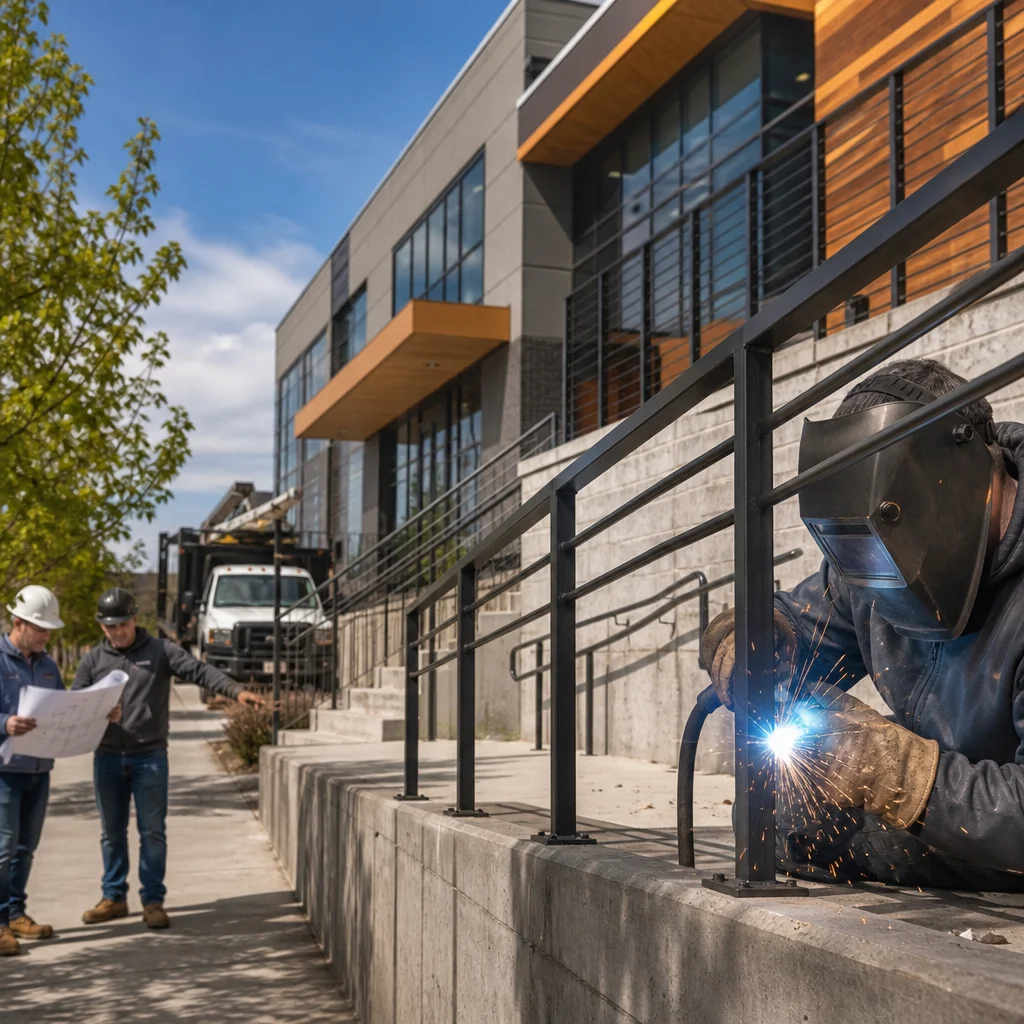
Welding creates a metallurgical bond that effectively makes two separate steel pieces into one continuous member. The weld pool fuses base metals together at the molecular level, eliminating the joint as a potential failure point.
This permanence is welding's greatest advantage. Once properly executed, a welded connection becomes as strong as the steel itself. There's no stress concentration at the joint, no risk of fastener loosening, and no mechanical weaknesses created by bolt holes that perforate the steel.
For load-bearing applications in commercial construction, this matters immensely. Consider a steel support beam for a rooftop HVAC platform. The weld connects the beam to the main column without introducing the stress risers that bolt holes create. The connection maintains full section strength throughout its life. In our experience, properly welded connections routinely outlast the buildings they support.
When we execute a weld, our certified technicians follow strict protocols: material inspection, joint preparation, heat management, and post-weld inspection. We work to structural standards including AWS D1.1 specifications. The result is a connection you can count on through decades of service.
Your action step: If your commercial project involves critical load paths, structural support, or high vibration environments, prioritize welding. Request references from past projects and confirm your contractor's certifications before proceeding.
Bolted Connections: Speed vs. Long-Term Performance
Bolted connections use mechanical fasteners to clamp steel members together. They're faster to install than welding because minimal site skill is required. A crew with basic training can tighten bolts on a schedule.
This speed creates a real attraction for time-sensitive projects. If your commercial renovation has a tight timeline and you need structural connections in place quickly, bolted assemblies can move the needle. They also allow for field adjustments during installation, which can be valuable in renovation work where existing conditions don't match original specifications exactly.
However, bolted connections carry inherent vulnerabilities that compound over time:
Fastener loosening from vibration and thermal cycling
Corrosion of bolts and contact surfaces in Colorado's moisture and salt environments
Stress concentration at bolt holes, which reduce effective cross-section of connected members
Progressive slippage as fasteners settle and relax under sustained load
Denver's weather accelerates these problems. Winter freeze-thaw cycles can actually work bolts loose as steel contracts and expands. Spring winds and seasonal temperature swings create vibration that loosens fasteners gradually. A bolted connection that seemed secure in July may be slightly loose by January, and slightly more loose by July of the following year.
This isn't theoretical. We've inspected failed bolted connections in buildings across the Denver metro area. Most failures traced back to fastener relaxation and corrosion rather than initial design inadequacy.
Your action step: If you choose bolted connections, build ongoing inspection and re-tensioning into your maintenance budget. Schedule fastener checks every 12-18 months. This cost often exceeds the premium of welding from the outset.
Load-Bearing Capacity: Why Welding Wins for Commercial Applications
Structural engineers design connections based on load paths, safety factors, and the weakest point in the system. With bolted connections, that weakest point is invariably the fastener holes. Steel around bolt holes experiences stress concentration that reduces the effective strength of the connected members.
For a steel plate with bolt holes, engineers must reduce the plate's calculated strength to account for the material removed by drilling. A 1/2-inch bolt hole eliminates material. Multiple holes eliminate more. The connected member's strength is now limited by the perforated section, not the full section.
Welded connections eliminate this penalty. The weld adds material rather than removing it. When properly sized and executed, a weld joint actually concentrates strength at the connection point. You get full section strength on both sides of the weld, with the weld itself carrying the full load across the joint.
This matters enormously for commercial applications with significant live loads. A steel canopy supporting snow load, a loading dock platform handling heavy equipment, or a building expansion structure carrying floor loads all benefit from welded connections' full-strength performance.
We've designed welded connections for Denver commercial projects ranging from small bracket welds to major structural connections. In every case, welded joints provide either higher load capacity in the same footprint or the ability to use smaller (and lighter, and cheaper) steel sections to achieve the same structural performance as bolted alternatives.
Your action step: Request a structural engineer's load capacity comparison for your project. Ask specifically about section requirements and safety factors under both welded and bolted scenarios. The difference often justifies welding's additional upfront cost.
Installation Time and Labor: Hidden Costs of Bolted Alternatives
The bolted connection advantage in installation speed is real but often overstated. Yes, bolting is faster than welding for a single connection. But commercial projects rarely involve single connections. They involve dozens or hundreds.
Once you factor in bolt procurement, fastener inventory management, torque verification, and field adjustments across multiple connections, the time savings shrink. More importantly, bolted connections require continuous site oversight to ensure fasteners are properly tensioned and installed to specification.
Welding, by contrast, requires fewer fasteners and less field coordination. Once a welder completes a connection to specification, the work is done. No follow-up tensioning needed. No inventory tracking for replacement bolts. No risk of fastener loss or mismatched replacements during maintenance.
For a typical Denver commercial project, we estimate that welded connections and bolted connections require comparable total installation time when accounting for all associated tasks. The real difference lies in schedule predictability and quality consistency.
Bolted connections introduce variables: fastener sourcing delays, incomplete tightening, improper torque application. We've seen projects stall because the specified bolt grade wasn't available locally. Welded connections depend on skilled labor, which we maintain in-house and can deploy on schedule.
Your action step: Request detailed timelines from your contractor for both methods, including procurement, installation, inspection, and follow-up work. True apples-to-apples comparison often reveals negligible time difference.
Durability and Maintenance: Our Welding Advantage Over Time
Here's where welding's superiority becomes financially obvious: maintenance costs over the building's life.
Bolted connections require periodic attention. Fasteners loosen. Corrosion develops at contact surfaces between bolt, washer, and steel. Bolt holes concentrate stress and can initiate cracks under fatigue loading. A commercial structure with bolted connections typically requires inspection every 1-2 years and fastener re-tensioning every 2-3 years.
Welded connections, once properly installed and inspected, need virtually no maintenance. There are no fasteners to loosen, no contact surfaces where moisture accumulates, no perforations to initiate cracks. Our welded structures in Denver have performed flawlessly for 15-20+ years with only routine structural inspection and coating maintenance.
Colorado's climate is particularly harsh on bolted connections. Our winters bring salt, moisture, and freeze-thaw cycling. Our springs bring wind gusts that create vibration. Summer heat and winter cold create thermal expansion and contraction. All of these factors accelerate fastener relaxation and corrosion.
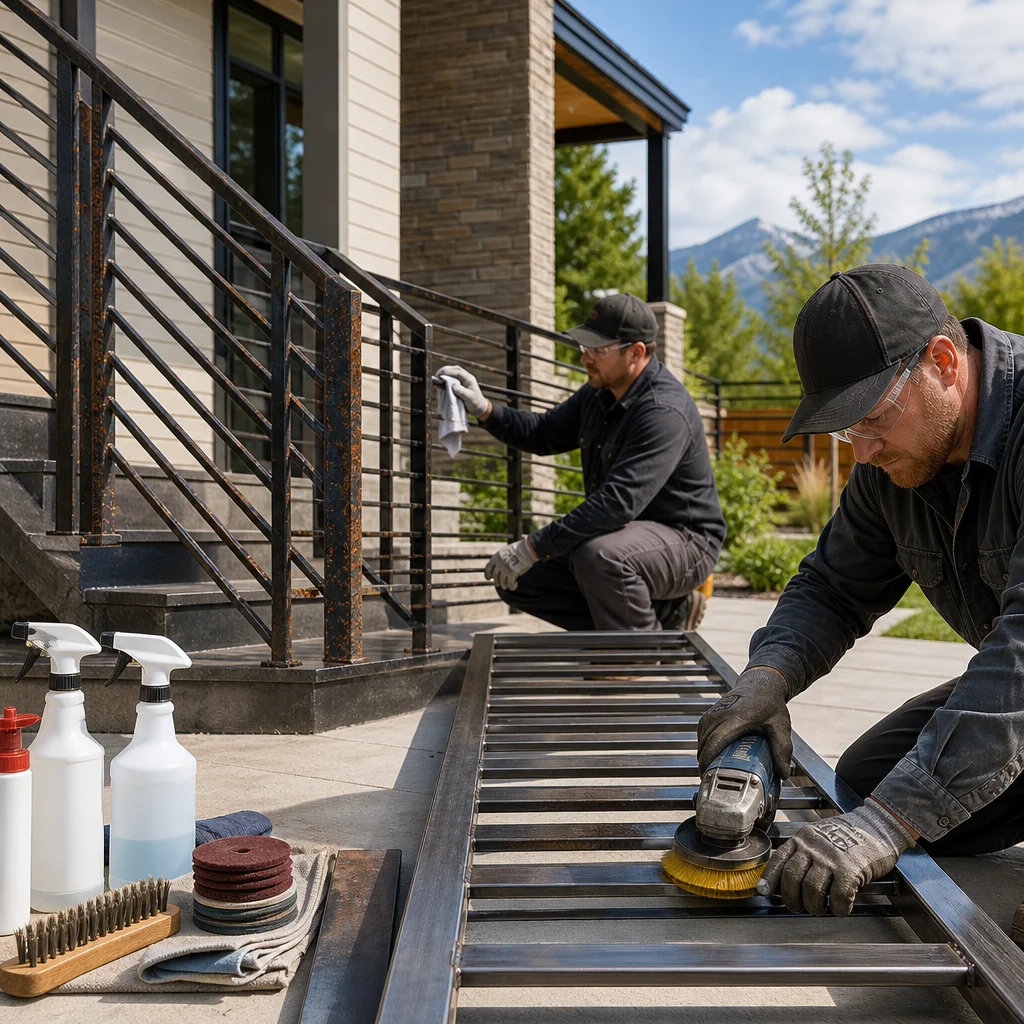
A bolted connection that might serve adequately in a mild coastal climate can deteriorate rapidly in the Denver area. We've inspected bolted railings, canopies, and structural connections installed less than 5 years prior that showed significant corrosion and fastener loss requiring re-work.
Welded connections we installed 10 years ago continue to perform without maintenance beyond annual visual inspection and touch-up painting.
Your action step: Calculate your projected maintenance costs for bolted connections over 20 years. Include annual inspections, fastener replacement, and remedial work. Compare this to welded connection costs. The cumulative savings of welding typically range from 30-50% of the initial connection cost over two decades.
Aesthetic Appeal: Professional Results Through Custom Welding
Commercial property appearance matters. It reflects on tenant quality, brand perception, and property value. Bolted connections are visibly fastened, with nuts, bolts, and washers visible on the structure. For some industrial applications, this look is acceptable or even appropriate.
For professional commercial environments, welded connections deliver superior aesthetics. Clean, finished weld joints look seamless and engineered. There's no hardware showing, no fasteners to distract from the structural form. Custom welded railings, canopies, and support structures present a polished, high-quality appearance.
We take pride in welding craftsmanship because it's visible. Every weld on our commercial projects is ground and finished to a professional appearance. We can match any architectural specification, from smooth ground finishes to decorative patterns. The weld becomes part of the design rather than a necessary functional component to hide.
This aesthetic advantage translates directly to property value and tenant satisfaction. Commercial tenants notice the quality of their facilities. Custom welded structures communicate durability and investment in quality in a way bolted connections simply cannot.
Your action step: Walk through commercial properties you admire in Denver. Notice the structural details. Most high-end commercial buildings feature welded rather than bolted connections for exactly this reason.
Cost Analysis: True Value of Quality Welded Steel
Let's address the cost question directly. Welded connections do cost more upfront than bolted connections. Skilled welders command premium wages compared to general labor. Welding equipment and inspection add cost. Material handling and quality control are more intensive.
We typically estimate welded connections cost 15-25% more than bolted alternatives for comparable structural work.
But this comparison ignores total cost of ownership. Over a 20-year building life:
Bolted connections: Initial cost, plus inspection costs ($500-2,000 annually), plus fastener replacement and remedial work ($1,000-5,000 every 3-5 years)
Welded connections: Higher initial cost, minimal ongoing maintenance beyond annual inspection
For a typical commercial project with $50,000-100,000 in connection work, the bolted route might save $7,500-25,000 initially but cost an additional $15,000-40,000 in maintenance over 20 years.
Welded connections shift cost forward to when you have contractor resources mobilized and project budgets allocated. You're not nickeling-and-diming the building with ongoing maintenance surprises.
We've documented this with our clients repeatedly. The initial welding cost premium is recovered through reduced maintenance costs within 10-15 years, then delivers pure savings for the remainder of the structure's life.
Affordable welding services in Denver can deliver this value without breaking project budgets. The investment in quality welding is ultimately the most economical approach to commercial steel connections.
Your action step: Request a 20-year total cost of ownership analysis from your contractor. Include maintenance, inspection, and fastener replacement in the bolted cost estimate. Most analyses favor welding significantly.
Why JKD Welding Is Your Clear Choice for Denver Commercial Projects
We've served Denver commercial property owners and managers for years, building our reputation on reliable, durable welded connections that outlast expectations and perform through Colorado's demanding climate.
Our approach combines certified welding expertise with structural understanding. We don't just weld; we engineer connections to specification, execute them to code, and stand behind them completely. Every weld is inspected for penetration, cleanliness, and dimensional accuracy. Every project is completed on schedule with professional finishing and full documentation.
When you partner with us on your commercial steel connection work, you're choosing a contractor who understands Denver-specific challenges. We know how our weather stresses connections. We know which materials and techniques perform best in our climate. We've built commercial structures and custom metalwork throughout the metro area that continue performing flawlessly years after installation.
Why Denver chooses JKD Welding for commercial metal fabrication projects comes down to this: We deliver durability, quality, and professional results that protect your investment and serve your property well into the future.
We offer free project estimates, so you can make your welded vs. bolted decision with complete information about cost, timeline, and performance. Contact us to discuss your commercial project. We're ready to recommend the best connection method for your specific application and deliver the professional welding that Denver commercial construction demands.
Frequently Asked Questions (FAQ)
When should we choose welded connections over bolted connections for our Denver commercial project?
We recommend welded connections for applications requiring maximum load-bearing capacity, permanent installations, and superior structural integrity. Welded joints are ideal when your project demands minimal maintenance, aesthetic appeal, and long-term durability that won't require ongoing inspection or tightening like bolted alternatives need.
What are the real costs we should expect when comparing welded versus bolted steel connections?
While welded connections typically have higher upfront fabrication costs, we find they deliver better true value because they eliminate future maintenance expenses, require no bolt replacement, and provide stronger performance that reduces liability risks on commercial properties. Bolted connections may appear cheaper initially, but hidden costs from inspections, repairs, and eventual reinforcement work often exceed what quality welding costs from the start.
How does installation time differ between welded and bolted steel methods?
We can complete welded connections in a single visit with precise timing, whereas bolted alternatives require installation followed by curing time and subsequent inspection and tightening phases. For Denver commercial projects on tight schedules, our welding approach typically reduces overall project duration and minimizes disruption to your operations.
Comments