


Custom Metal Railing Fabrication and Installation Timeline in Denver
Table of Contents
Why Property Safety and Curb Appeal Matter More Than You Think
A quality metal railing does far more than look good on your deck or staircase. It's a critical safety barrier that protects your family, guests, and tenants from falls, while also serving as one of the first visual impressions visitors have of your property. Whether you're managing a residential home, commercial building, or multi-unit property in Denver, the condition and design of your railings reflect your commitment to safety and maintenance standards.
We've seen how the right custom metal railing transforms a space. Beyond code compliance, a well-designed railing can define architectural character, improve property value, and demonstrate that safety isn't an afterthought. Denver's climate and weather patterns also demand railings built to withstand freeze-thaw cycles, intense UV exposure, and occasional heavy snow loads. Cutting corners on railing quality leads to rust, corrosion, and safety concerns that become expensive to repair later.
That's why we focus on custom fabrication rather than generic off-the-shelf solutions. Each project receives careful design review, precise material selection, and professional installation that ensures your railing performs reliably for decades.
Common Challenges Denver Property Owners Face With Railing Solutions
Many Denver property owners struggle with several recurring problems. Existing railings often fail prematurely due to poor drainage design, which traps moisture against metal surfaces and accelerates rust formation. We frequently discover that standard code-compliant railings don't match the architectural style of the property, leaving owners with functional but aesthetically disconnected safety features.
Inconsistent installation quality is another major issue. Improper fastening, inadequate post spacing, or failure to account for ground settlement causes railings to shift, become wobbly, or develop gaps that violate safety codes. Property managers dealing with aging buildings often inherit mixed materials and finishes that look patchwork and unmaintained.
Timeline uncertainty also frustrates property owners. Without clear communication from contractors about how long custom fabrication actually takes, projects drag on and interfere with move-in dates, tenant occupancy, or seasonal deadlines. We've found that transparency about each phase of the process eliminates surprises and helps owners plan accordingly.
How Our Fabrication Process Ensures Quality and Durability
Quality begins before we ever strike an arc with our welding equipment. We start by understanding your specific needs, site conditions, and aesthetic preferences. Our approach combines precision measurement, careful material selection, and time-tested welding techniques that create railings built to last.
Every joint we fabricate receives inspection for proper penetration, fusion, and structural integrity. We don't rely on single-pass welds or shortcuts that save time but compromise strength. Our workshop uses modern equipment and follows industry standards that ensure consistent, professional results across every project.
The choice of material matters significantly in Denver's environment. We work with galvanized steel, stainless steel, and powder-coated finishes, each selected based on exposure conditions, maintenance expectations, and design goals. Proper finishing protects against corrosion while maintaining the visual appeal you're investing in.
Timeline Expectations From Design to Final Installation
Most custom metal railing projects in Denver follow a predictable timeline, though specific schedules depend on project scope, material availability, and site conditions. A typical residential railing project takes four to six weeks from initial design consultation to final installation and inspection. Complex commercial projects with architectural specifications or multiple building sections may extend to eight to twelve weeks.
Breaking this down, you can expect:
Design and measurement: 1 to 2 weeks
Fabrication in our workshop: 2 to 3 weeks
Site preparation and pre-installation coordination: 3 to 5 days
Professional installation: 1 to 3 days depending on railing length and complexity
Final inspection and finishing: 1 to 2 days
Seasonal factors matter in Denver. Winter projects may face slight delays due to weather conditions affecting site accessibility, concrete curing times, or material delivery schedules. Spring and fall typically offer the most predictable timelines.
Our Custom Design and Measurement Phase
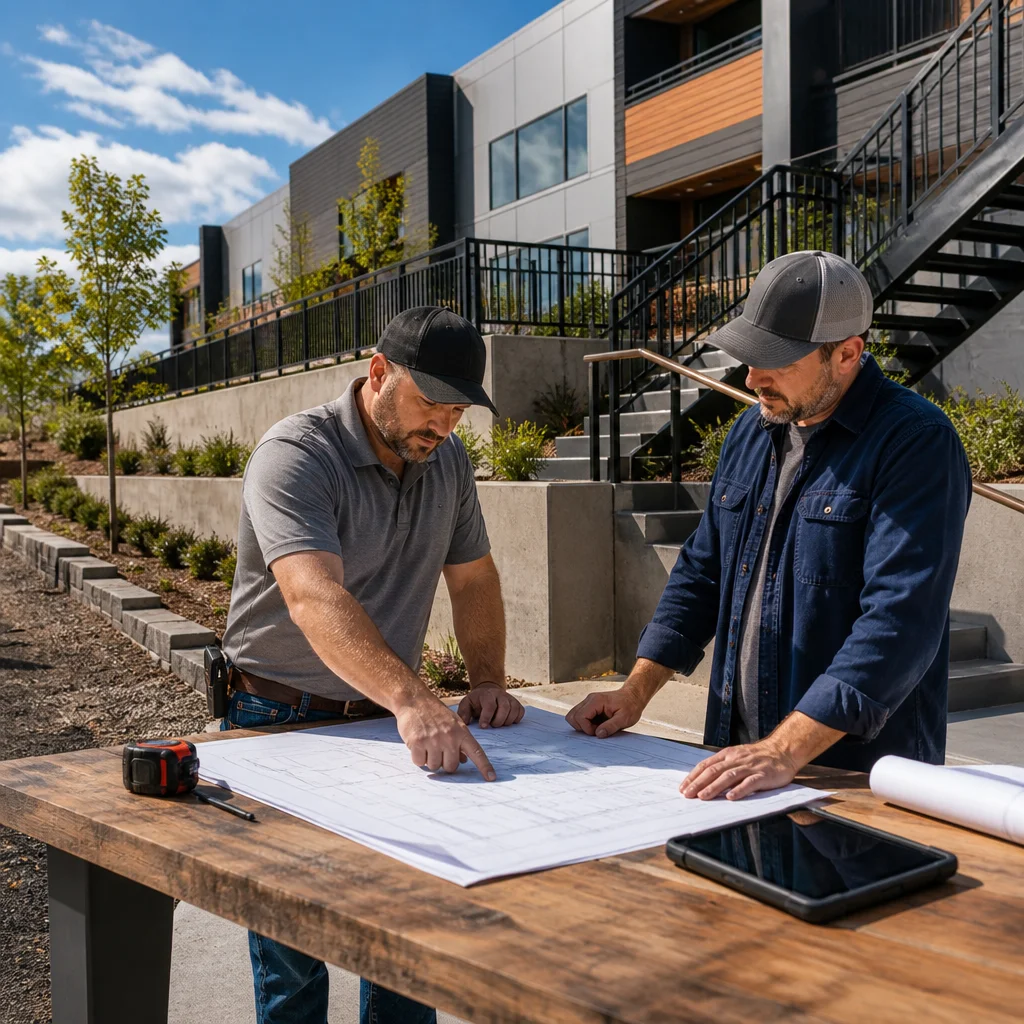
We begin every project with an on-site consultation where we assess your property, discuss your vision, and take precise measurements. This phase is critical because even small errors in dimension or site assessment compound through fabrication and create installation problems.
During the measurement phase, we document post locations, verify ground elevation and any slopes, check for obstructions or utilities that might affect installation, and photograph the existing conditions. We ask detailed questions about how the railing will be used, whether it needs to withstand unusual loads (like equipment mounting), and any architectural or style preferences that matter to you.
We then translate these measurements into detailed shop drawings that show every dimension, material specification, and finish detail. You'll review these drawings before we begin fabrication, ensuring we've captured your expectations accurately. This step prevents costly revisions later and confirms that our design meets all local Denver building codes and safety requirements.
Material Selection and Fabrication in Our Workshop
Material selection depends on your specific environment and maintenance preferences. Galvanized steel offers excellent corrosion resistance and requires minimal maintenance, making it ideal for residential exterior railings exposed to Denver's weather. Stainless steel provides premium appearance and durability, though at higher cost. Powder-coated finishes let us create custom colors and add aesthetic flexibility while protecting underlying metal.
Once materials arrive at our workshop, our team carefully cuts, bends, and shapes each component according to specification. We use modern fabrication equipment that ensures consistency and precision. Posts, balusters, rails, and brackets are prepared with attention to fit and finish.
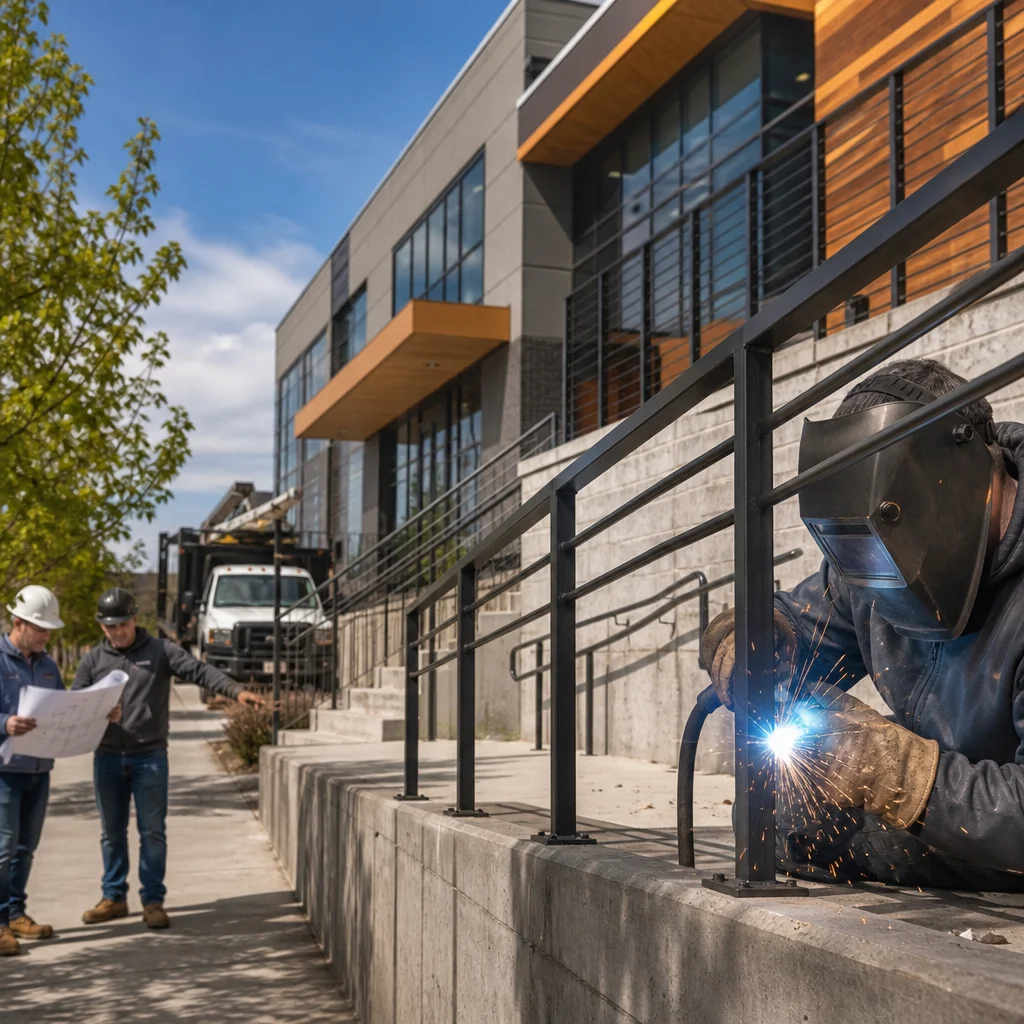
The welding stage demands skill and precision. We position each component, verify alignment, and create strong, clean welds that form the structural backbone of your railing. Every weld receives visual inspection and testing to ensure it meets code requirements and will withstand the stresses your railing will encounter over its lifespan.
Preparation and Site Assessment Before Installation
Before we arrive with the finished railing, we coordinate site preparation. This includes confirming that existing structural elements (like stairs, decks, or concrete) are properly finished and stable. We verify that post locations align with solid structure and that any concrete work is fully cured.
We also confirm weather conditions and site access. Installation crews need clear pathways, adequate lighting, and weather suitable for fastening and any finishing work. We communicate these requirements in advance so you're not surprised by crew needs on installation day.
Our team performs a final pre-installation inspection of the railing components themselves, checking that everything arrived safely and that no damage occurred during transport or storage. We also verify that all fasteners, hardware, and finishing materials are on-site and ready.
Professional Installation Techniques We Use
Professional installation is where design and fabrication meet real-world performance. Our installation crews begin by verifying exact positioning against the original measurements and site conditions. Posts are set plumb (perfectly vertical), secured to solid structure with appropriate fasteners for the material type, and checked with levels and laser measurement tools.
We install posts first, ensuring they're properly anchored and braced while we attach rails and balusters. Each fastener receives appropriate torque and locking mechanisms to prevent loosening over time. We pay careful attention to spacing and alignment, confirming that baluster spacing meets code requirements (typically not more than 4 inches) and that all components are straight and true.
Any welding required on-site receives the same quality standards as our workshop fabrication. Touch-up finishing and painting happens during this phase to ensure clean, professional appearance and complete corrosion protection.
Finishing Touches and Quality Inspection
Once the railing is physically installed and secured, we address finishing details. This includes cleaning off any construction debris, touching up paint or protective coatings where fasteners penetrated finishes, and verifying that all surfaces are properly sealed against moisture.
We perform a comprehensive quality inspection covering structural integrity, safety compliance, and aesthetic expectations. This includes checking post spacing, baluster alignment, fastener security, finish quality, and overall appearance. We verify that the installed railing meets all applicable Denver building codes and manufacturer specifications.
You'll receive a walkthrough showing the finished work and performing any final adjustments if needed. We explain maintenance requirements specific to your material and finish choice, ensuring you understand how to protect your investment long-term.
Maintenance Tips to Protect Your Investment
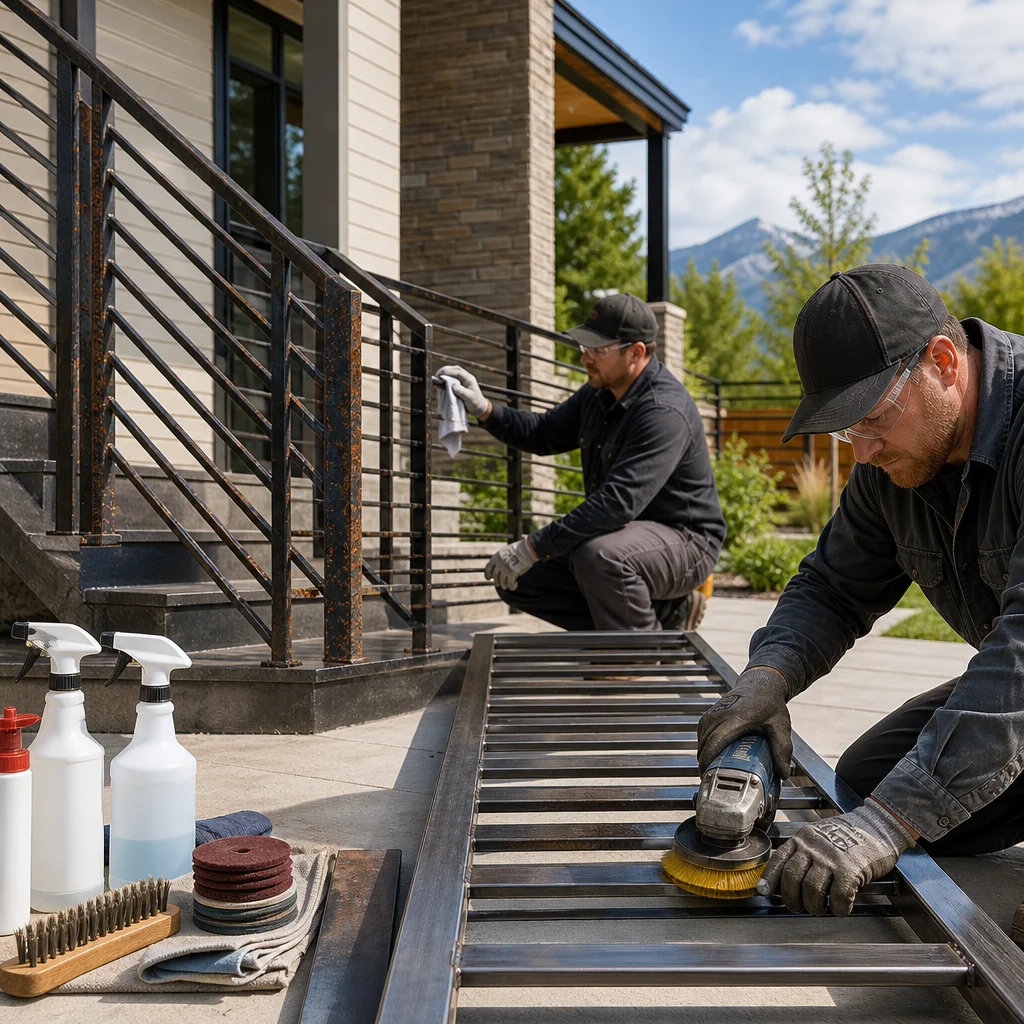
Proper maintenance extends the life of your custom metal railing significantly. For galvanized railings, periodic cleaning with mild soap and water removes dirt and salt buildup. Inspect regularly for any signs of rust or coating damage, addressing small issues before they expand.
Stainless steel railings benefit from occasional cleaning with stainless steel cleaner to maintain appearance and remove fingerprints or water spots. Check fasteners annually to ensure they remain tight, as vibration and weather cycles can gradually loosen connections over time.
Powder-coated finishes should be protected from abrasive scrubbing or harsh chemicals that can damage the coating. Touch up any chipped areas promptly to prevent rust from initiating beneath the coating. Denver's intense sun can gradually fade darker colors, which is normal and doesn't affect structural performance.
For all railings, keep drainage areas clear so water doesn't pool against posts or where components meet. Minor rusting at welds or fasteners can be addressed with touch-up paint or rust-preventative spray before problems spread. These simple maintenance steps preserve both safety and appearance.
Schedule Your Free Project Estimate Today
If your Denver property needs new railings or you're uncertain about the condition and safety of existing ones, we're ready to help. We offer free, no-obligation project estimates that include site assessment, material recommendations, timeline expectations, and pricing. Our team brings years of experience with residential and commercial railing projects across the Denver area, and we're committed to delivering quality workmanship that exceeds code requirements and your expectations.
Contact us today to discuss your railing project and learn how custom metal fabrication can enhance both the safety and appearance of your property. We'll answer your questions, address any concerns, and provide a clear roadmap for your project from design through installation and beyond.
For further reading: Railings and handrails installation.
Frequently Asked Questions (FAQ)
How long does the entire process take from design to final installation?
We typically complete custom metal railing projects within 3-4 weeks, depending on complexity and current project load. Our timeline breaks down into design and measurement (3-5 days), fabrication in our workshop (7-10 days), site preparation (1-2 days), and professional installation (1-3 days). We'll provide you with a detailed schedule during your free estimate so you know exactly what to expect.
What makes your fabrication process different from other Denver railing companies?
We handle every step in-house, from initial design through final installation, which means we control quality at every stage. Our workshop uses precision equipment to ensure each piece meets exact specifications, and our installers follow professional techniques that prioritize both safety and aesthetics. We inspect all work before leaving your property to guarantee durability and proper function.
Do you offer maintenance guidance after installation?
Yes, we provide maintenance tips to help you protect your investment long-term. Proper care depends on your material choice—whether steel, aluminum, or stainless steel—and we explain cleaning methods and protective measures during the final walkthrough. Regular maintenance extends the lifespan of your railings and keeps them looking sharp for years.
Comments